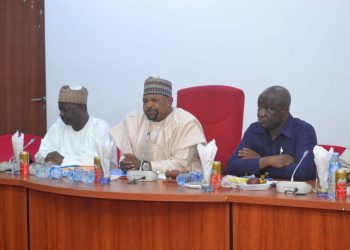


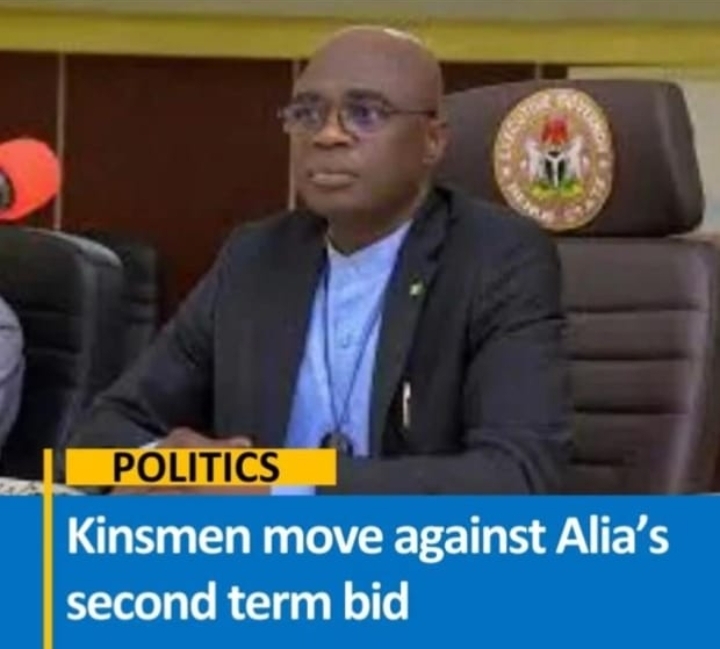
Recent reports indicate that kinsmen of Governor Hyacinth Alia from the Kunav block of Vandeikya Local Government Area have openly declared their intention to oppose his re-election bid in the 2027 governorship election, citing poor governance and worsening insecurity across Benue State.

This development deserves thoughtful reflection rather than emotional reaction. When voices rise from a leader’s own ancestral home, the concern often carries moral weight that transcends ordinary political disagreement. Such voices are usually rooted in lived realities, communal expectations, and a deep longing for safety, dignity, and progress.
Security remains the most sacred responsibility of government. Where communities continue to experience killings, displacement, destruction of farmland, and persistent fear, citizens naturally begin to question the effectiveness of leadership. Even where efforts are being made, the true measure of governance in the eyes of the people is visible improvement in daily life. Without this improvement, hope weakens and trust slowly fades.
Benue State has endured prolonged humanitarian hardship marked by internally displaced persons camps, disrupted agriculture, and fragile livelihoods. If these conditions remain largely unchanged within a leadership tenure, electorates may reasonably conclude that relief, rehabilitation, and resettlement responses have not met the urgency of the crisis. A second mandate in democracy is usually earned through measurable transformation rather than intention alone.
Opposition from kinsmen also carries symbolic meaning. It suggests that dissatisfaction may not merely be the language of political rivals but a reflection of grassroots disappointment. When those closest to a leader express concern, the wider electorate often pauses to listen more carefully. This does not automatically determine truth, but it strengthens the seriousness of the questions being asked.
Democracy itself provides the framework for such moments. The right to renew or withdraw a mandate is a peaceful instrument of accountability. Choosing not to support a second term can therefore be understood not as hostility, but as a constitutional demand for better outcomes, stronger protection of lives, and a more hopeful collective future.
For the people of Benue State, the defining question is simple and sincere. Has life become safer, more stable, and more promising than before. The honest answer that lives in the hearts of ordinary citizens will ultimately shape the decision of 2027. Beyond political slogans and public arguments, lived experience remains the most reliable judge of leadership.
In the end, power belongs not to any office holder, group, or sentiment, but to the people themselves. And when kinsmen speak, wisdom calls Benue to listen carefully, reflect deeply, and choose courageously for the future.
Terlumun Timothy Iorwuese
Advocate For Good Governance and People-Centered Leadership.
©JIKMEDIA