

By Comfort Olayinka

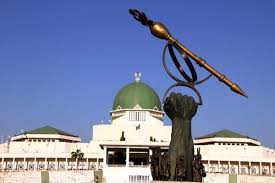
The Senate on Wednesday called on the Federal Government to immediately expand the rehabilitation of the Akure–Ore Road to include the long-abandoned Ore–Okitipupa–Igbokoda Unity Road — a critical corridor serving oil-producing communities in Ondo State.
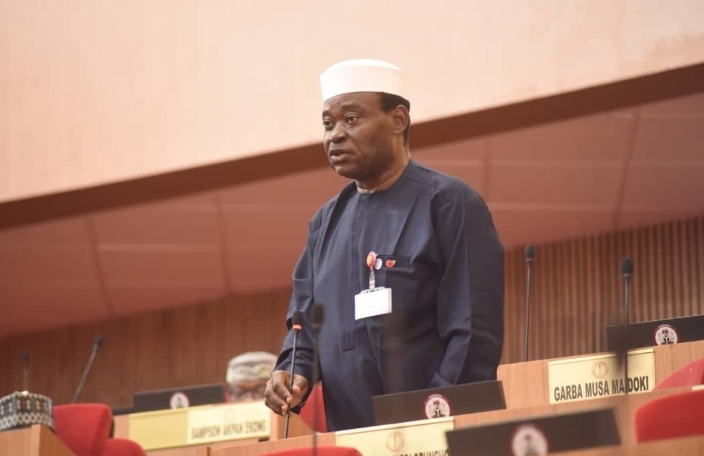
Leading the demand, Senator Jimoh Ibrahim, representing Ondo South, described the continued exclusion of the Unity Road from federal intervention as a “glaring injustice” to a region that significantly contributes to Nigeria’s oil revenue.
Presenting a motion titled “Achieving Fair and Balanced Infrastructure Development: Expansion of Akure–Ore Road Repairs to the Ore–Okitipupa–Igbokoda Unity Road,” Ibrahim argued that meaningful infrastructure development must reflect the country’s economic realities, especially in coastal oil belts where road access fuels productivity and growth.
He noted that the Akure–Ore project, coded C/No. 6509 (ERGP12190717), had already received ₦31.02 million in the 2022 and 2023 budgets. Yet, he insisted that the true economic backbone of the region lies in the Unity Road, which connects several oil-bearing communities across Ondo South.
“Ondo State contributes over seven per cent of Nigeria’s crude oil revenue, yet the primary access road to these communities remains abandoned. Excluding this road from federal intervention is not just an oversight; it is a disservice,” Ibrahim declared.
Emphasising that the corridor serves over two million residents and 1.5 million voters, the senator warned that prolonged neglect has worsened a sense of marginalisation in a region vital to national development.
Lawmakers from both ruling and opposition parties backed the motion, insisting that expanding the rehabilitation works aligns with Nigeria’s push for fair, balanced, and economically strategic infrastructure development.
After extensive deliberations, the Senate resolved to urge the Federal Ministry of Works to incorporate the Ore–Okitipupa–Igbokoda Federal Road into the ongoing Akure–Ore project — a directive many senators described as “long overdue.”